Techcode®
DATASHEET
60V/2A Step-Down Converter
TD1660
TD8325
General Description
Features
The TD1660 is a high frequency step-down switching
regulator with integrated internal highside high voltage
power MOSFET. It provides 2A output with current mode
control for fast loop response and easy compensation.
The wide 9V to 60V input range accommodates a variety of
step-down applications, including those in automotive input
environment. A 1μA shutdown mode supply current allows
use in battery-powered applications.
High power conversion efficiency over a wide load range is
achieved by scaling down the switching frequency at light
load condition to reduce the switching and gate driving
losses.
The frequency foldback helps prevent inductor current
runaway during startup and thermal shutdown provides
reliable, fault tolerant operation.
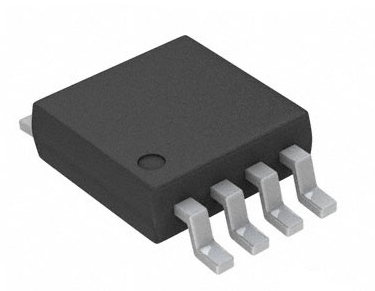
The TD1660 is available in ESOP8 package.
Wide 9V to 60V Operating Input Range
250mΩ Internal Power MOSFET
Up to 1MHz Programmable Switching Frequency
180μA Quiescent Current
Ceramic Capacitor Stable
Internal Soft-Start
Up to 95% Efficiency
Output Adjustable from 0.8V to 52V
Available in ESOP8 PbFree Package
Application
High Voltage Power Conversion
Automotive Systems
Industrial Power Systems
Distributed Power Systems
Battery Powered Systems
Pin Configurations
(Top view)
December 1, 2020.
Techcode Semiconductor Limited
1
www.techcodesemi.com
�Techcode®
DATASHEET
60V/2A Step-Down Converter
TD1660
TD8325
Pin Description
Pin Number
Pin Name
Description
1
SW
Switch Node. This is the output from the high-side switch. A low VF Schottky rectifier to ground
is required. The rectifier must be close to the SW pins to reduce switching spikes.
2
EN
Enable Input. Pulling this pin below the specified threshold shuts the chip down. Pulling it up
above the specified threshold or leaving it floating enables the chip.
3
COMP
4
FB
5
GND,
Exposed
pad
6
FREQ
Compensation. This node is the output of the GM error amplifier. Control loop frequency
compensation is applied to this pin.
Feedback. This is the input to the error amplifier. An external resistive divider connected
between the output and GND is compared to the internal +0.8V reference to set the regulation
voltage.
Ground. It should be connected as close as possible to the output capacitor avoiding the high
current switch paths. Connect exposed pad to GND plane for optimal thermal performance.
Switching Frequency Program Input. Connect a resistor from this pin to ground to set the
switching frequency.
7
VIN
Input Supply. This supplies power to all the internal control circuitry, both BS regulators and the
high-side switch. A decoupling capacitor to ground must be placed close to this pin to minimize
switching spikes.
8
BST
Bootstrap. This is the positive power supply for the internal floating high-side MOSFET driver.
Connect a bypass capacitor between this pin and SW pin.
Ordering Information
TD1660
□
□
Circuit Type
Packing:
Blank:Tube
R: Tape and Reel
Package
M:ESOP-8
December 1, 2020.
Techcode Semiconductor Limited
2
www.techcodesemi.com
�Techcode®
DATASHEET
60V/2A Step-Down Converter
TD1660
TD8325
Function Block
Figure1 Function Block Diagram of TD1660
Typical Application Circuit
C4
U1
8
7
VIN
0.1uF
L1
10uH
BST
SW
D1
SS36
GND
TD1660
5
COMP
4
Figure2
R2
22K
3
FREQ
6
C3
R4
150K
December 1, 2020.
C2
22uF
R1
120K
EN
FB
C1
4.7uF
5V OUT
VIN
R5
1M
2
1
680pF
R3
43K
C5
68pF
5V Output Typical Application Schematic
Techcode Semiconductor Limited
3
www.techcodesemi.com
�Techcode®
DATASHEET
60V/2A Step-Down Converter
TD1660
TD8325
Absolute Maximum Ratings (at TA=25℃)
Symbol
Parameter
Rating
Unit
VIN
Supply Voltage
-0.3 to 60
V
VSW
Switch Voltage
-0.5V to VIN+0.5
V
BST to SW
-0.3 to +5
V
All other Pins
-0.3 to +5
V
2K
V
Junction Temperature
150
ºC
Maximum Lead Soldering Temperature (10 Seconds)
260
ºC
ESD
ESD Susceptibility (Human Body Model)
TJ
TSDR
Recommended Operation Conditions
Symbol
Parameter
Range
Unit
VIN
VIN Supply Voltage
9 ~ 60
VOUT
Converter Output Voltage
0.8 ~ 52
V
-40 ~ 125
o
TJ
Operating Junction Temp
V
C
Electrical Characteristics
Unless otherwise specified, these specifications apply over VIN=12V,VEN=2.5V,VCOMP=1.4V, TA=25°C
Specifications over temperature are guaranteed by design and characterization.
Characteristics
Symbol
Conditions
Min
Typ
Max
Units
Feedback Voltage
VFB
9V < VIN < 60V
0.780
0.800
0.820
V
Top Switch RDS(ON) (Note)
RDS(ON)-T
VBST – VSW = 5V
175
250
330
mΩ
VEN = 0V, VSW = 0V
-
1
-
μA
2.2
-
4.7
A
-
5.7
-
A/V
-
400
-
V/V
Top Switch Leakage
Current Limit
COMP to Current Sense
Transconductance
GCS
Error Amp Voltage Gain
Error Amp Transconductance
ICOMP = ±3μA
-
120
-
μA/A
Error Amp Min Source current
VFB = 0.7V
-
10
-
μA
Error Amp Min Sink current
VFB = 0.9V
-
-10
-
μA
VIN UVLO Threshold
-
7.2
-
V
VIN UVLO Hysteresis
-
0.5
-
V
Soft-Start Time
0V < VFB < 0.8V
-
0.5
-
ms
Oscillator Frequency
RFREQ = 150kΩ
0.6
-
0.8
MHz
-
100
-
ns
-
1
3
μA
Minimum Switch On Time
Shutdown Supply Current
December 1, 2020.
VEN < 0.3V
Techcode Semiconductor Limited
4
www.techcodesemi.com
�Techcode®
DATASHEET
60V/2A Step-Down Converter
TD8325
TD1660
Quiescent Supply Current
No load, VFB = 0.9V
-
180
-
μA
Thermal Shutdown
Hysteresis = 20°C
-
150
-
°C
Minimum Off Time
-
100
-
ns
Minimum On Time
-
100
-
ns
EN Up Threshold
1.3
-
2.2
V
EN Threshold Hysteresis
-
200
-
mV
Typical Efficiency
December 1, 2020.
Techcode Semiconductor Limited
5
www.techcodesemi.com
�Techcode®
DATASHEET
60V/2A Step-Down Converter
TD1660
TD8325
Operation
The TD1660 is a programmable frequency, non-synchronous,
step-down switching regulator with an integrated high-side
high voltage power MOSFET. It provides a single highly
efficient solution with current mode control for fast loop
response and easy compensation. It features a wide input
voltage range, internal soft-start control and precision
current limiting. Its very low operational quiescent current
makes it suitable for battery powered applications.
PWM Control Mode
At moderate to high output current, the TD1660 operates in
a fixed frequency, peak current control mode to regulate
the output voltage. A PWM cycle is initiated by the internal
clock. The power MOSFET is turned on and remains on until
its current reaches the value set by the COMP voltage.
When the power switch is off, it remains off for at least
100ns before the next cycle starts. If, in one PWM period,
the current in the power MOSFET does not reach the COMP
set current value, the power MOSFET remains on, saving a
turn-off operation.
Pulse Skipping Mode
Under light load condition the switching frequency stretches
down zero to reduce the switching loss and driving loss.
Error Amplifier
The error amplifier compares the FB pin voltage with the
internal reference (REF) and outputs a current proportional
to the difference between the two. This output current is
then used to charge the external compensation network to
form the COMP voltage, which is used to control the power
MOSFET current.
During operation, the minimum COMP voltage is clamped to
0.9V and its maximum is clamped to 2.0V. COMP is
internally pulled down to GND in shutdown mode. COMP
should not be pulled up beyond 2.6V.
Internal Regulator
Most of the internal circuitries are powered from the 2.6V
internal regulator. This regulator takes the VIN input and
operates in the full VIN range. When VIN is greater than
December 1, 2020.
3.0V, the output of the regulator is in full regulation. When
VIN is lower than 3.0V, the output decreases.
Enable Control
The TD1660 has a dedicated enable control pin(EN). With
high enough input voltage, the chip can be enabled and
disabled by EN which has positive logic. Its falling threshold
is a precision 1.2V, and its rising threshold is 1.5V (300mV
higher).
When EN is pulled down below 1.2V, the chip is put into the
lowest shutdown current mode. When EN is higher than
zero but lower than its rising threshold, the chip is still in
shutdown mode but the shutdown current increases
slightly.
Under-Voltage Lockout (UVLO)
Under-voltage lockout (UVLO) is implemented to protect the
chip from operating at insufficient supply voltage. The UVLO
rising threshold is about 7.2V while its falling threshold is a
consistent 6.5V.
Internal Soft-Start
The soft-start is implemented to prevent the converter
output voltage from overshooting during startup and short
circuit recovery. When the chip starts, the internal circuitry
generates a soft-start voltage (SS) ramping up from 0V to
2.6V. When it is lower than the internal reference(REF), SS
overrides REF so the error amplifier uses SS as the reference.
When SS is higher than REF, REF regains control.
Thermal Shutdown
Thermal shutdown is implemented to prevent the chip from
operating at exceedingly high temperatures. When the
silicon die temperature is higher than its upper threshold, it
shuts down the whole chip. When the temperature is lower
than its lower threshold, the chip is enabled again.
Floating Driver and Bootstrap Charging
The floating power MOSFET driver is powered by an
external bootstrap capacitor. This floating driver has its own
UVLO protection. This UVLO’s rising threshold is 7.2V with a
Techcode Semiconductor Limited
6
www.techcodesemi.com
�Techcode®
DATASHEET
60V/2A Step-Down Converter
TD8325
hysteresis of 150mV. The driver’s UVLO is soft-start related.
In case the bootstrap voltage hits its UVLO, the soft-start
circuit is reset. To prevent noise, there is 20μs delay before
the reset action. When bootstrap UVLO is gone, the reset is
off and then soft-start process resumes.
The bootstrap capacitor is charged and regulated to about
5V by the dedicated internal bootstrap regulator. When the
voltage between the BST and SW nodes is lower than its
regulation, a PMOS pass transistor connected from VIN to
BST is turned on. The charging current path is from VIN, BST
and then to SW. External circuit should provide enough
voltage headroom to facilitate the charging.
As long as VIN is sufficiently higher than SW, the bootstrap
capacitor can be charged. When the power MOSFET is ON,
VIN is about equal to SW so the bootstrap capacitor cannot
be charged. When the external diode is on, the difference
between VIN and SW is largest, thus making it the best
period to charge. When there is no current in the inductor,
SW equals the output voltage VOUT so the difference
between VIN and VOUT can be used to charge the bootstrap
capacitor.
At higher duty cycle operation condition, the time period
available to the bootstrap charging is less so the bootstrap
capacitor may not be sufficiently charged.
In case the internal circuit does not have sufficient voltage
and the bootstrap capacitor is not charged, extra external
circuitry can be used to ensure the bootstrap voltage is in
the normal operational region. Refer to External Bootstrap
Diode in Application section.
The DC quiescent current of the floating driver is about
20μA. Make sure the bleeding current at the SW node is
higher than this value, such that:
Current Comparator and Current Limit
The power MOSFET current is accurately sensed via a
current sense MOSFET. It is then fed to the high speed
current comparator for the current mode control purpose.
The current comparator takes this sensed current as one of
its inputs. When the power MOSFET is turned on, the
comparator is first blanked till the end of the turn on
transition to avoid noise issues. The comparator then
December 1, 2020.
TD1660
compares the power switch current with the COMP voltage.
When the sensed current is higher than the COMP voltage,
the comparator output is low, turning off the power
MOSFET. The cycle-by-cycle maximum current of the
internal power MOSFET is internally limited.
Short Circuit Protection
When the output is shorted to the ground, the switching
frequency is folded back and the current limit is reduced to
lower the short circuit current. When the voltage of FB is at
zero, the current limit is reduced to about 50% of its full
current limit. When FB voltage is higher than 0.4V, current
limit reaches 100%.
In short circuit FB voltage is low, the SS is pulled down by FB
and SS is about 100mV above FB. In case the short circuit is
removed, the output voltage will recover at the SS pace.
When FB is high enough, the frequency and current limit
return to normal values.
Startup and Shutdown
If both VIN and EN are higher than their appropriate
thresholds, the chip starts. The reference block starts first,
generating stable reference voltage and currents, and then
the internal regulator is enabled. The regulator provides
stable supply for the remaining circuitries.
While the internal supply rail is up, an internal timer holds
the power MOSFET OFF for about 50μs to blank the startup
glitches. When the internal soft-start block is enabled, it first
holds its SS output low to ensure the remaining circuitries
are ready and then slowly ramps up.
Three events can shut down the chip: EN low, VIN low and
thermal shutdown. In the shutdown procedure, power
MOSFET is turned off first to avoid any fault triggering. The
COMP voltage and the internal supply rail are then pulled
down.
Programmable Oscillator
The TD1660 oscillating frequency is set by an external
resistor, RFREQ from the FREQ pin to ground. The value of
RFREQ can be calculated from:
Techcode Semiconductor Limited
7
www.techcodesemi.com
�Techcode®
DATASHEET
60V/2A Step-Down Converter
TD1660
TD8325
Application information
Setting the Output Voltage
The output voltage is set using a resistive voltage divider
from the output voltage to FB pin. The voltage divider
divides the output voltage down to the feedback voltage by
the ratio:
Thus the output voltage is:
For example, the value for R2 can be 10kΩ. With this value,
R1 can be determined by:
Where ILOAD is the load current.
Table 1 lists a number of suitable inductors from various
manufacturers. The choice of which style inductor to use
mainly depends on the price vs. size requirements and any
EMI requirement.
Output Rectifier Diode
The output rectifier diode supplies the current to the
inductor when the high-side switch is off. To reduce losses
due to the diode forward voltage and recovery times, use a
Schottky diode.
Choose a diode whose maximum reverse voltage rating is
greater than the maximum input voltage, and whose
current rating is greater than the maximum load current.
Table 2 lists example Schottky diodes and manufacturers.
For example, for a 3.3V output voltage, R2 is 10kΩ, and R1 is
31.6kΩ.
Inductor
The inductor is required to supply constant current to the
output load while being driven by the switched input
voltage. A larger value inductor will result in less ripple
current that will result in lower output ripple voltage.
However, the larger value inductor will have a larger
physical size, higher series resistance, and/or lower
saturation current.
A good rule for determining the inductance to use is to
allow the peak-to-peak ripple current in the inductor to be
approximately 30% of the maximum switch current limit.
Also, make sure that the peak inductor current is below the
maximum switch current limit. The inductance value can be
calculated by:
Where VOUT is the output voltage, VIN is the input voltage,
fS is the switching frequency, and ΔIL is the peak-to-peak
inductor ripple current.
Choose an inductor that will not saturate under the
maximum inductor peak current. The peak inductor current
can be calculated by:
December 1, 2020.
Input Capacitor
The input current to the step-down converter is
discontinuous, therefore a capacitor is required to supply
the AC current to the step-down converter while
maintaining the DC input voltage. Use low ESR capacitors for
the best performance. Ceramic capacitors are preferred, but
tantalum or low-ESR electrolytic capacitors may also suffice.
For simplification, choose the input capacitor with RMS
current rating greater than half of the maximum load
current. The input capacitor (C1) can be electrolytic,
tantalum or ceramic.
When using electrolytic or tantalum capacitors, a small, high
quality ceramic capacitor, i.e. 0.1μF, should be placed as
close to the IC as possible. When using ceramic capacitors,
make sure that they have enough capacitance to provide
sufficient charge to prevent excessive voltage ripple at input.
The input voltage ripple caused by capacitance can be
estimated by:
Techcode Semiconductor Limited
8
www.techcodesemi.com
�Techcode®
DATASHEET
60V/2A Step-Down Converter
TD8325
Output Capacitor
The output capacitor (C2) is required to maintain the DC
output voltage. Ceramic, tantalum, or low ESR electrolytic
capacitors are recommended. Low ESR capacitors are
preferred to keep the output voltage ripple low. The output
voltage ripple can be estimated by:
Where L is the inductor value and RESR is the equivalent
series resistance (ESR) value of the output capacitor.
In the case of ceramic capacitors, the impedance at the
switching frequency is dominated by the capacitance. The
output voltage ripple is mainly caused by the capacitance.
For simplification, the output voltage ripple can be
estimated by:
TD1660
load resistor value.
The system has two poles of importance. One is due to the
compensation capacitor (C3), the output resistor of error
amplifier. The other is due to the output capacitor and the
load resistor. These poles are located at:
Where, GEA is the error amplifier transconductance,
120μA/V.
The system has one zero of importance, due to the
compensation capacitor (C3) and the compensation resistor
(R3). This zero is located at:
The system may have another zero of importance, if the
output capacitor has a large capacitance and/or a high ESR
value. The zero, due to the ESR and capacitance of the
output capacitor, is located at:
In the case of tantalum or electrolytic capacitors, the ESR
dominates the impedance at the switching frequency. For
simplification, the output ripple can be approximated to:
The characteristics of the output capacitor also affect the
stability of the regulation system. The TD1660 can be
optimized for a wide range of capacitance and ESR values.
Compensation Components
TD1660 employs current mode control for easy
compensation and fast transient response. The system
stability and transient response are controlled through the
COMP pin. COMP pin is the output of the internal error
amplifier. A series capacitor-resistor combination sets a
pole-zero combination to control the characteristics of the
control system. The DC gain of the voltage feedback loop is
given by:
Where AVEA is the error amplifier voltage gain, 400V/V; GCS
is the current sense transconductance, 5.6A/V; RLOAD is the
December 1, 2020.
In this case, a third pole set by the compensation capacitor
(C5) and the compensation resistor (R3) is used to
compensate the effect of the ESR zero on the loop gain. This
pole is located at:
The goal of compensation design is to shape the converter
transfer function to get a desired loop gain. The system
crossover frequency where the feedback loop has the unity
gain is important. Lower crossover frequencies result in
slower line and load transient responses, while higher
crossover frequencies could cause system unstable. A good
rule of thumb is to set the crossover frequency to
approximately one-tenth of the switching frequency.
To optimize the compensation components for conditions
not listed in Table 3, the following procedure can be used.
1. Choose the compensation resistor (R3) to set the desired
crossover frequency. Determine the R3 value by the
following equation:
Techcode Semiconductor Limited
9
www.techcodesemi.com
�Techcode®
DATASHEET
60V/2A Step-Down Converter
TD8325
Where fC is the desired crossover frequency.
2. Choose the compensation capacitor (C3) to achieve the
desired phase margin. For applications with typical inductor
values, setting the compensation zero, fZ1, below one forth
of the crossover frequency provides sufficient phase margin.
Determine the C3 value by the following equation:
3. Determine if the second compensation capacitor (C5) is
required. It is required if the ESR zero of the output
capacitor is located at less than half of the switching
frequency, or the following relationship is valid:
If this is the case, then add the second compensation
capacitor (C5) to set the pole fP3 at the location of the ESR
zero. Determine the C5 value by the equation:
High Frequency Operation
The switching frequency of TD1660 can be programmed up
to 1MHz by an external resistor.
The minimum on time of TD1660 is about 100ns(typ). Pulse
skipping operation can be seen more easily at higher
switching frequency due to the minimum on time.
Since the internal bootstrap circuitry has higher impedance,
which may not be adequate to charge the bootstrap
capacitor during each (1-D)×Ts charging period, an external
bootstrap charging diode is strongly recommended if the
switching frequency is about 1MHz (see External Bootstrap
Diode section for detailed implementation information).
With higher switching frequencies, the inductive reactance
(XL) of capacitor comes to dominate, so that the ESL of
input/output capacitor determines the input/output ripple
voltage at higher switching frequency. As a result of that,
high frequency ceramic capacitor is strongly recommended
as input decoupling capacitor and output filtering capacitor
for such high frequency operation.
December 1, 2020.
TD1660
Layout becomes more important when the device switches
at higher frequency. It is essential to place the input
decoupling capacitor, catch diode and the TD1660 (VIN pin,
SW pin and PGND) as close as possible, with traces that are
very short and fairly wide. This can help to greatly reduce
the voltage spike on SW node, and lower the EMI noise level
as well.
Try to run the feedback trace as far from the inductor and
noisy power traces as possible. It is often a good idea to run
the feedback trace on the side of the PCB opposite of the
inductor with a ground plane separating the two. The
compensation components should be placed closed to the
TD1660. Do not place the compensation components close
to or under high dv/dt SW node, or inside the high di/dt
power loop. If you have to do so, the proper ground plane
must be in place to isolate those. Switching loss is expected
to be increased at high switching frequency. To help to
improve the thermal conduction, a grid of thermal vias can
be created right under the exposed pad. It is recommended
that they be small (15mil barrel diameter) so that the hole is
essentially filled up during the plating process, thus aiding
conduction to the other side. Too large a hole can cause
‘solder wicking’ problems during the reflow soldering
process. The pitch (distance between the centers) of several
such thermal vias in an area is typically 40mil.
External Bootstrap Diode
An external bootstrap diode may enhance the efficiency of
the regulator. In below cases, an external BST diode is
recommended from the 5V to BST pin:
There is a 5V rail available in the system;
VIN is no greater than 5V;
VOUT is between 3.3V and 5V;
This diode is also recommended for high duty cycle
operation (when VOUT/VIN > 65%) applications.
The bootstrap diode can be a low cost one such as IN4148
or BAT54.
Techcode Semiconductor Limited
10
www.techcodesemi.com
�Techcode®
DATASHEET
60V/2A Step-Down Converter
TD1660
TD8325
At no load or light load, the converter may operate in pulse
skipping mode in order to maintain the output voltage in
regulation. Thus there is less time to refresh the BS voltage.
In order to have enough gate voltage under such operating
conditions, the difference of VIN –VOUT should be greater
than 3V. For example, if the VOUT is set to 3.3V, the VIN
needs to be higher than 3.3V+3V=6.3V to maintain enough
BST voltage at no load or light load. To meet this
requirement, EN pin can be used to program the input UVLO
voltage to VOUT+3V.
PCB Layout Note
PCB layout is very important to achieve stable operation. It
is highly recommended to duplicate EVB layout for optimum
performance.
If change is necessary, please follow these guidelines and
take Figure 5 for reference.
1) Keep the path of switching current short and minimize
the loop area formed by Input cap, high-side MOSFET and
external switching diode..
2) Bypass ceramic capacitors are suggested to be put close
to the VIN Pin.
3) Ensure all feedback connections are short and direct.
Place the feedback resistors and compensation components
as close to the chip as possible.
4) Route SW away from sensitive analog areas such as FB.
5) Connect IN, SW, and especially GND respectively to a
large copper area to cool the chip to improve thermal
performance and long-term reliability.
December 1, 2020.
Techcode Semiconductor Limited
11
www.techcodesemi.com
�Techcode®
DATASHEET
60V/2A Step-Down Converter
TD1660
TD8325
Package Information
ESOP-8
Package Outline Dimensions
December 1, 2020.
Techcode Semiconductor Limited
12
www.techcodesemi.com
�Techcode®
DATASHEET
60V/2A Step-Down Converter
TD1660
TD8325
Design Notes
December 1, 2020.
Techcode Semiconductor Limited
13
www.techcodesemi.com
�