HX24C128/256
Features
Wide voltage operation
- VCC = 1.8V to 5.5V
Low-Power Devices (ISB = 3 µA @ 5.5V) Available
Operating Ambient Temperature: -40°C to +85°C
Internally Organized 16,384 X 8 (128K), 32,768 X 8 (256K)
Two-wire Serial Interface
Schmitt Trigger, Filtered Inputs for Noise Suppression
Bidirectional Data Transfer Protocol
1 MHZ(5V), 400 kHz ( 1.8V, 2.7V, 3.3V) Compatibility
Write Protect Pin for Hardware Data Protection
64-byte Page (128K/256K) Write Modes
Partial Page Writes Allowed
Self-timed Write Cycle (5 ms max)
High-reliability
- Endurance: 1 Million Write Cycles
- Data Retention: 100 Years
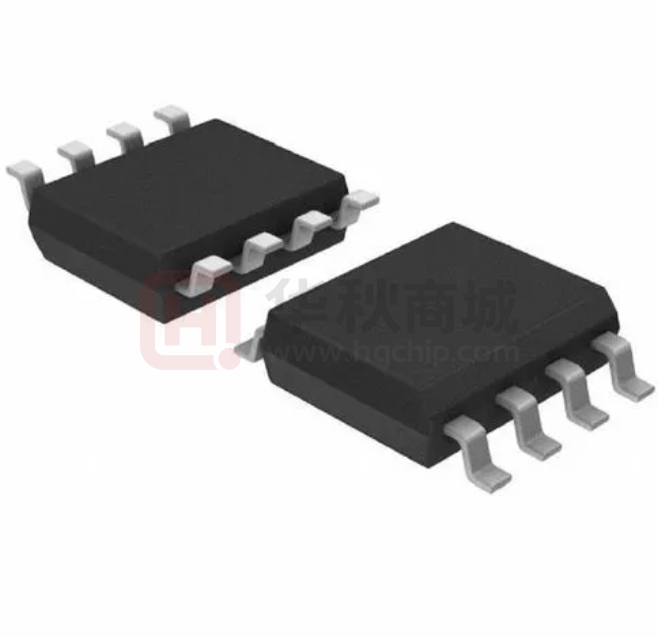
8-lead DIP, 8-lead JEDEC SOP and 8-lead MSOP Packages
Opdering Information
DEVICE
Package Type
MARKING
Packing
Packing Qty
HX24C128PG
DIP8
24C128
TUBE
2000/box
HX24C256PG
DIP8
24C256
TUBE
2000/box
HX24C128DRG
SOP8
24C128
REEL
2500/reel
HX24C256DRG
SOP8
24C256
REEL
2500/reel
HX24C128DGKRG
MSOP8
C128
REEL
3000/reel
HX24C256DGKRG
MSOP8
C256
REEL
3000/reel
General Description
The HX24C128 / HX24C256 provides 131,072/262,144 bits of serial electrically erasable
and programmable read-only memory (EEPROM) organized as4096 words of 8 bits each
The device is optimized for use in many industrial and commercial applications where
low-power
And low-coltage operation are 8-lead MSOP packages and is accessed via a Tow-wire serial
interface
深圳市汉芯半导体有限公司
http://www.hanschip.com
1 / 13
2019 OCT V1.0
�HX24C128/256
Pin Configuration
DIP8/SOP8/MSOP8
Pin Descriptions
Pin
Number
1–2
5
Designation
A0 – A1
SDA
Type
I
I/O&
Open-dra
in
Name and Functions
Address Inputs
DEVICE/PAGE ADDRESSES (A1, A0):
The A1 and A0 pins are device address inputs that are
hardwired or left not connected for hardware
compatibility with other 24Cxx devices. When the pins
are hardwired, as many as four 128K/256K devices may
be addressed on a single bus system (device addressing
is discussed in detail under the Device Addressing
section). If the pins are left floating, the A2, A1 and A0
pins will be internally pulleddown to GND if the capacitive
coupling to the circuit board VCC plane is 3 pF, recommends connecting
the address pins to GND.
Serial Data
SERIAL DATA (SDA):The SDA pin is bi-directional for
serial data transfer. Thispin is open-drain driven and may
be wire-ORed with any number of other open-drain or
open- collector devices.
I
Serial Clock Input
SERIAL CLOCK (SCL): The SCL input is used to
positive edge clock data into each EEPROM device and
negative edge clock data out of each device.
WP
I
Write Protect
WRITE PROTECT (WP):The write protect input, when
connected to GND, allows normal write operations.
When WP is connected high to VCC, all write operations
to the memory are inhibited. If the pin is left floating, the
WP pin will be internally pulled down to GND if the
capacitive coupling to the circuit board VCC plane is 3 pF, recommends connecting the pin
to GND. Switching WP to VCC prior to a write operation
creates a software write protect function. The write
protection feature is enabled and operates as shown in
the following Table 1.
8
GND
VCC
P
P
Ground
Power Supply
3
NC
NC
6
7
4
SCL
深圳市汉芯半导体有限公司
http://www.hanschip.com
No connect
2 / 13
2019 OCT V1.0
�HX24C128/256
Table 1:Write Protect
WP Pin Status:
At VCC
At GND
Part of the Array Protected
HX24C128
HX24C256
Full (128K) Array
Full (256K) Array
Normal Read/Write Operations
Block Diagram
Functional Description
1.Memory Organization
HX24C128 , 128K SERIAL EEPROM: The 128K is internally organized as 256 pages of 64
bytes each. Random word addressing requires a 14-bit data word address.
HX24C256 , 256K SERIAL EEPROM: The 256K is internally organized as 512 pages of 64
bytes each. Random word addressing requires a 15-bit data word address.
2.Device Operation
CLOCK and DATA TRANSITIONS: The SDA pin is normally pulled high with an external
device.
深圳市汉芯半导体有限公司
http://www.hanschip.com
3 / 13
2019 OCT V1.0
�HX24C128/256
Data on the SDA pin may change only during SCL low time periods (see to Figure 1 on page
5). Data changes during SCL high periods will indicate a start or stop condition as defined
below.
START CONDITION: A high-to-low transition of SDA with SCL high is a start condition which
must precede any other command (see to Figure 2 on page 5).
STOP CONDITION: A low-to-high transition of SDA with SCL high is a stop condition. After a
read sequence, the stop command will place the EEPROM in a standby power mode (see
Figure 2 on page 5).
ACKNOWLEDGE: All addresses and data words are serially transmitted to and from the
EEPROM in 8-bit words. The EEPROM sends a “0” to acknowledge that it has received
each word. This happens during the ninth clock cycle.
STANDBY MODE: The HX24C128 / HX24C256 features a low-power standby mode which
is enabled: (a) upon power-up and (b) after the receipt of the STOP bit and the completion of
any internal operations
MEMORY RESET: After an interruption in protocol, power loss or system reset, any two-wire
part can be reset by following these steps:
1.Clock up to 9 cycles.
2.Look for SDA high in each cycle while SCL is high.
3.Create a start condition
Figure1.Data Validity
Figure2.Start and Stop Definition
深圳市汉芯半导体有限公司
http://www.hanschip.com
4 / 13
2019 OCT V1.0
�HX24C128/256
Figure3.Output Acknowledge
3. Device Addressing
The 128K/256K EEPROM devices all require an 8-bit device address word following a start
condition to enable the chip for a read or write operation (see to Figure 4 on page 5).
The device address word consists of a mandatory “1”, “0” sequence for the first four most
significant bits as shown. This is common to all the Serial EEPROM devices.
The 128K/256K uses the three device address bits A2, A1, A0 to allow as many as eight
devices on the same bus. These bits must compare to their corresponding hardwired input
pins. The A2, A1, and A0 pins use an internal proprietary circuit that biases them to a logic
low condition if the pins are allowed to float.
The eighth bit of the device address is the read/write operation select bit. A read operation is
initiated if this bit is high and a write operation is initiated if this bit is low.
Upon a compare of the device address, the EEPROM will output a “0”. If a compare is not
made, the chip will return to a standby state.
NOISE PROTECTION: Special internal circuitry placed on the SDA and SCL pins prevent
small noise spikes from activating the device.
DATA SECURITY: The HX24C128 / HX24C256 has a hardware data protection scheme that
allows the user to write protect the entire memory when the WP pin is at VCC.
4.Write Operations
BYTE WRITE: A write operation requires an 8-bit data word address following the device
address word and acknowledgment. Upon receipt of this address, the EEPROM will again
respond with a “0” and then clock in the first 8-bit data word. Following receipt of the 8-bit
data word, the EEPROM will output a “0” and the addressing device, such as a
microcontroller, must terminate the write sequence with a stop condition. At this time the
EEPROM enters an internally timed write cycle, tWR,to the nonvolatile memory. All inputs are
disabled during this write cycle and the EEPROM will not respond until the write is complete
(see Figure 5 on page 8).
PAGE WRITE: The 128K/256K devices are capable of 64-byte page writes.
深圳市汉芯半导体有限公司
http://www.hanschip.com
5 / 13
2019 OCT V1.0
�HX24C128/256
A page write is initiated the same as a byte write, but the microcontroller does not send a
stop condition after the first data word is clocked in. Instead, after the EEPROM
acknowledges receipt of the first data word, the microcontroller can transmit up to 63 more
data words. The EEPROM will respond with a “0” after each data word received. The
microcontroller must terminate the page write sequence with a stop condition (see Figure 6
on page 8).
The data word address lower six (128K/256K) bits are internally incremented following the
receipt of each data word. The higher data word address bits are not incremented, retaining
the memory page row location. When the word address, internally generated, reaches the
page boundary, the following byte is placed at the beginning of the same page. If more than
64 data words are transmitted to the EEPROM, the data word address will “roll over” and
previous data will be overwritten.
ACKNOWLEDGE POLLING: Once the internally timed write cycle has started and the
EEPROM inputs are disabled, acknowledge polling can be initiated. This involves sending a
start condition followed by the device address word. The read/write bit is representative of
the operation desired. Only if the internal write cycle has completed will the EEPROM
respond with a “0”, allowing the read or write sequence to continue.
5.Read Operations
Read operations are initiated the same way as write operations with the exception that the
read/write select bit in the device address word is set to “1”. There are three read operations:
current address read, random address read and sequential read.
CURRENT ADDRESS READ: The internal data word address counter maintains the last
address accessed during the last read or write operation, incremented by one. This address
stays valid between operations as long as the chip power is maintained. The address “roll
over” during read is from the last byte of the last memory page to the first byte of the first
page. The address “roll over” during write is from the last byte of the cur- rent page to the
first byte of the same page.
Once the device address with the read/write select bit set to “1” is clocked in and
acknowledged by the EEPROM, the current address data word is serially clocked out. The
microcontroller does not respond with an input “0” but does generate a following stop
condition (see Figure 7 on page 8).
RANDOM READ: A random read requires a “dummy” byte write sequence to load in the
data word address. Once the device address word and data word address are clocked in
and acknowledged by the EEPROM, the microcontroller must generate another start
condition. The microcontroller now initiates a current address read by sending a device
address with the read/write select bit high. The EEPROM acknowledges the device address
and serially clocks out the data word. The microcontroller does not respond with a “0” but
does generate a following stop condition (see Figure 8 on page 8).
SEQUENTIAL READ: Sequential reads are initiated by either a current address read or a
深圳市汉芯半导体有限公司
http://www.hanschip.com
6 / 13
2019 OCT V1.0
�HX24C128/256
random address read. After the microcontroller receives a data word, it responds with an
acknowledge. As long as the EEPROM receives an acknowledge, it will continue to
increment the data word address and serially clock out sequential data words. When the
memory address limit is reached, the data word address will “roll over” and the sequential
read will continue. The sequential read operation is terminated when the microcontroller
does not respond with a “0” but does generate a following stop condition(see Figure 9on
page 9)
Figure 4.
Device Address
Figure5.Byte Write
Figure6.Page Write
Figure7.Current Address Read
深圳市汉芯半导体有限公司
http://www.hanschip.com
7 / 13
2019 OCT V1.0
�HX24C128/256
Figure8.Random Read
Figure 9.Sequential Read
Electrical Characteristics
Absolute Maximum Stress Ratings
DC Supply Voltage................................-0.3V to +6.5V
Input / Output Voltage ........................GND-0.3V to VCC+0.3V
Operating Ambient Temperature . ..... .-40°C to +85°C Storage
Temperature ........................................-55°C to +125°C
*Comments
Stresses above those listed under "Absolute Maximum Ratings" may cause permanent
damage to this device. These are stress ratings only. Functional operation of this device at
these or any other conditions above those indicated in the operational sections of this
specification is not implied or intended. Exposure to the absolute maximum rating conditions
for extended periods may affect device reliability.
DC Electrical Characteristics
Applicable over recommended operating range from: TA = -40℃ to +85℃, VCC =
+1.8V to +5.5V (unless otherwise noted)
深圳市汉芯半导体有限公司
http://www.hanschip.com
8 / 13
2019 OCT V1.0
�HX24C128/256
Parameter
Symbol
Min.
Typ.
Max.
Unit
Condition
Supply Voltage
VCC1
1.8
-
5.5
V
Supply Voltage
VCC2
2.5
-
5.5
V
Supply Voltage
VCC3
2.7
-
5.5
V
Supply Voltage
VCC4
4.5
-
5.5
V
Supply Current VCC = 5.0V
ICC1
-
0.4
1.0
mA
READ at 400 kHz
Supply Current VCC = 5.0V
ICC2
-
2.0
3.0
mA
WRITE at 400 kHz
Standby Current VCC = 1.8V
ISB1
- 0.6
1.0 µA
VIN= VCC or VSS
Standby Current VCC = 2.5V
ISB2
- 1.0
2.0 µA
VIN= VCC or VSS
- 1.0
2.0 µA
- 1.0
3.0 µA
Standby Current VCC = 2.7V
Standby Current VCC = 5.0V
ISB3
ISB4
VIN= VCC or VSS
VIN= VCC or VSS
Input Leakage Current
ILI
-
0.10
3.0 µA
VIN = VCC or VSS
Output Leakage Current
ILO
-
0.05
3.0 µA
VOUT = VCC or VSS
Input Low Level
VIL
–0.6
Input High Level
VIH
VCCx0.7
--
VCCx0.3
V
-
VCC+0.5
V
0.4 V
Output Low Level VCC =5.0V
VOL3
-
-
Output Low Level VCC =3.0V
VOL2
-
-
0.4
V
IOL = 2.1 mA
Output Low Level VCC =1.8V
VOL1
-
-
0.2
V
IOL = 0.15 mA
IOL= 3.0 mA
Pin Capacitance
Applicable over recommended operating range from TA=25℃,f=1.0MHz,VCC=+1.8V
Parameter
Symbol
Min.
Typ.
Max.
Unit
Condition
Input/Output Capacitance (SDA)
CI/O
-
-
8
pF
VI/O = 0V
Input Capacitance (A0, A1, A2, SCL)
CIN
-
-
6
pF
VIN = 0V
AC Electrical Characteristics
Applicable over recommended operating range from TA=-40℃ to+85℃,VCC=+1.8V
to+5.5V,CL=1TTL Gate and 100PF(unless otherwise noted)
Parameter Symbol
Min.
1.8, 2.7, 5.0-volt
Typ.
Max.
Units
Clock Frequency, SCL
fSCL
-
-
400
kHz
Clock Pulse Width Low
tLOW
1.2
-
-
µs
Clock Pulse Width High
tHIGH
0.6
-
-
µs
Noise Suppression Time
tI
-
-
50
ns
tAA
0.1
-
0.9
µs
Clock Low to Data Out Valid
深圳市汉芯半导体有限公司
http://www.hanschip.com
9 / 13
2019 OCT V1.0
�HX24C128/256
Time the bus must be free
tBUF
1.2
-
-
µs
Start Hold Time
tHD.STA
0.6
-
-
µs
Start Setup Time
tSU.STA
0.6
-
-
µs
Data In Hold Time
tHD.DAT
0
-
-
µs
Data In Setup Time
tSU.DAT
100
-
-
ns
before a new transmission canstart
Inputs Rise Time
tR
-
-
0.3
µs
Inputs Fall Time
tF
-
-
300
ns
Stop Setup Time
tSU.STO
0.6
-
-
µs
50 -
-
ns
-
-
5
ms
1M
-
-
Write Cycles
Data Out Hold Time
tDH
Write Cycle Time
tWR
5.0V, 25
C, Byte Mode
Endurance
Bus Timing
Figure10.SCL:serial Clock,SDA:Serial Data I/O
Write Cycle Timing
Figure 11. SCL: Serial Clock, SDA: Serial Data I/O
Note:
1. The write cycle time tWR is the time from a valid stop condition of a write sequence
to the end of the internal clear/write cycle.
深圳市汉芯半导体有限公司
http://www.hanschip.com
10 / 13
2019 OCT V1.0
�HX24C128/256
PHYSICAL DIMENSIONS
DIP8
D1
L1
L
E
B
d
D
A
c
a
b
Dimensions In Millimeters(DIP8)
A
B
D
D1
E
L
L1
a
b
c
Min:
6.10
9.00
8.40
7.42
3.10
0.50
3.00
1.50
0.85
0.40
Max:
6.68
9.50
9.00
7.82
3.55
0.70
3.60
1.55
0.90
0.50
Symbol:
d
2.54 BSC
SOP8
Q
A
C
C1
B
D
A1
a
0.25
b
Dimensions In Millimeters(SOP8)
A
A1
B
C
C1
D
Min:
1.35
0.05
4.90
5.80
3.80
0.40
0°
0.35
Max:
1.55
0.20
5.10
6.20
4.00
0.80
8°
0.45
Symbol:
深圳市汉芯半导体有限公司
http://www.hanschip.com
11 / 13
Q
a
b
1.27 BSC
2019 OCT V1.0
�HX24C128/256
MSOP8
Q
A
C1
C
B
A1
0.20
D
b
a
Dimensions In Millimeters(MSOP8)
A
A1
B
C
C1
D
Min:
0.80
0.05
2.90
4.75
2.90
0.35
0°
0.25
Max:
0.90
0.20
3.10
5.05
3.10
0.75
8°
0.35
Symbol:
深圳市汉芯半导体有限公司
http://www.hanschip.com
12 / 13
Q
a
b
0.65 BSC
2022 MAY
�HX24C128/256
IMPORTANT STATEMENT:
Shenzhen Hanschip semiconductor co.,ltd. reserves the right to change
the products and services provided without notice. Customers should
obtain the latest relevant information before ordering, and verify the
timeliness and accuracy of this information.
Customers are responsible for complying with safety standards and
taking safety measures when using our products for system design and
machine manufacturing to avoid potential risks that may result in
personal injury or property damage.
Our products are not licensed for applications in life support, military,
aerospace, etc., so we do not bear the consequences of the application of
these products in these fields.
Our documentation is only permitted to be copied without any tampering
with the content, so we do not accept any responsibility or liability for the
altered documents.
深圳市汉芯半导体有限公司
http://www.hanschip.com
13 / 13
2022 MAY
�